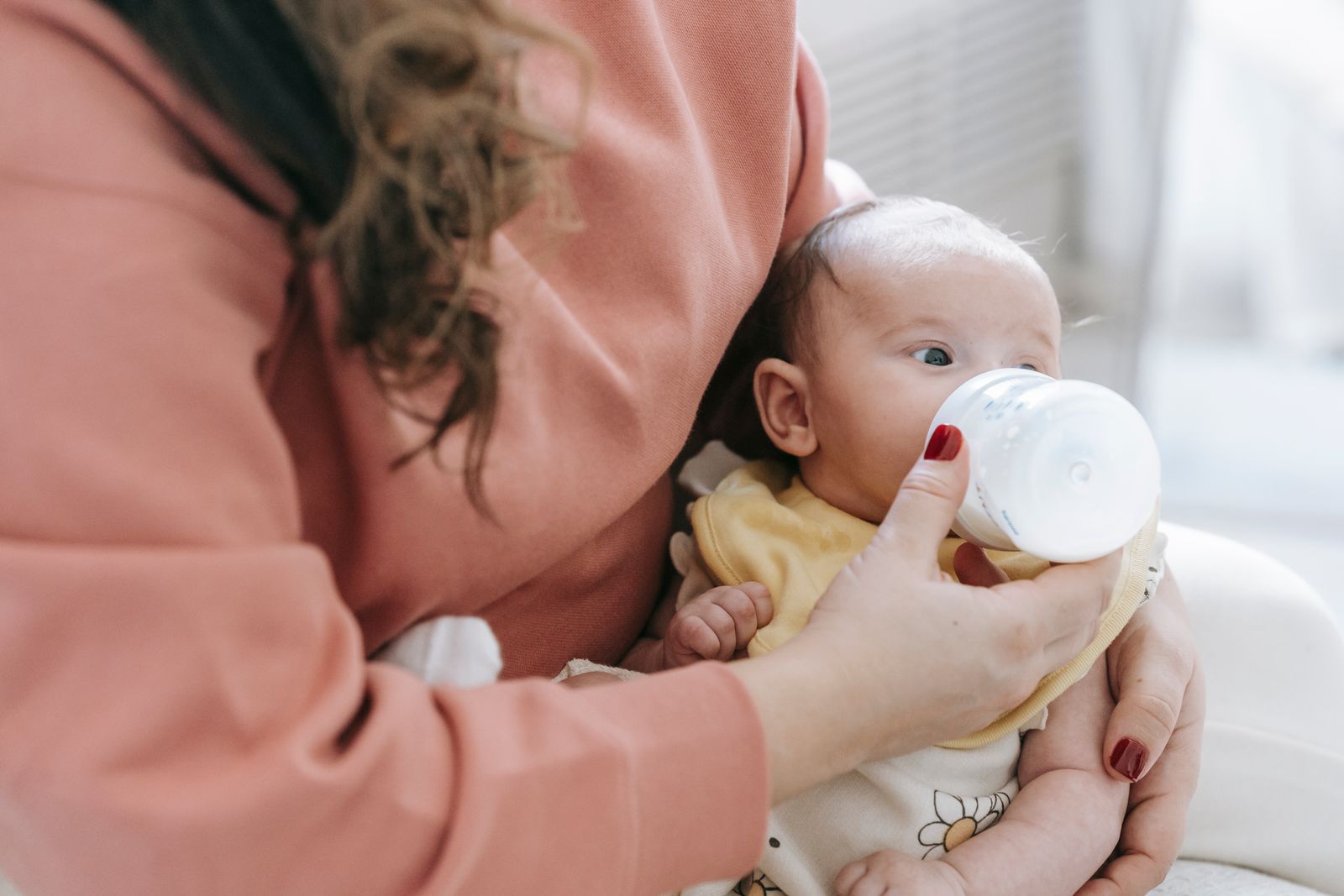
How much your newborn should be eating depends a lot on how you feed. With a bottle, you can see exactly how much went in. At the breast, you can't, and your baby is the one deciding when they've had enough. Here's what to expect either way.
TL;DR: Newborn appetites start tiny (about 5 to 7 ml on day 1) and grow quickly to roughly 2 to 4 ounces per feed by about 1 month. If you breastfeed directly, you don't measure ounces, you follow your baby's cues and watch diapers and weight. The chart matters most for pumped or bottle feeds.
The newborn feeding chart
| Age | Per feed | Feeds/day |
|---|---|---|
| Day 1 | 5–7 ml (~1 tsp) | 8–12 |
| Days 2–3 | 14–27 ml | 8–12 |
| Days 4–7 | 30–60 ml (1–2 oz) | 8–12 |
| Weeks 2–4 | 60–90 ml (2–3 oz) | 7–9 |
| 1–3 months | 90–120 ml (3–4 oz) | 7–9 |
Treat these as ballpark ranges. Healthy babies vary, and appetite changes day to day, especially around growth spurts.
The first few days: a tiny stomach
Newborn stomachs are genuinely tiny, which is why those first feeds are so small and so frequent. A rough size guide:
- Day 1: about the size of a marble (5–7 ml).
- Day 3: about the size of a walnut (22–27 ml).
- Day 7: about the size of an apricot (45–60 ml).
- 1 month: about the size of a large egg (80–150 ml).
Those early small volumes of colostrum are exactly what your baby needs. You're not falling short, their tank is just small.
If you're breastfeeding directly
Don't count ounces. You can't see them, and you don't need to. Instead, feed on demand, let your baby finish the first breast before offering the second, and judge intake by diapers and weight gain rather than numbers. We cover both in is my baby getting enough breast milk? and how often a newborn should breastfeed.
If you're bottle or pumped feeding
- Use the chart as a starting point, then follow your baby's fullness cues.
- Try paced bottle feeding: hold the bottle more horizontally, keep baby upright, and pause often so they control the flow.
- Stop when your baby shows they're done (turning away, slowing down, relaxing hands). A few leftover ounces is fine.
Cues over numbers: a baby who is gaining well and producing enough diapers is eating enough, even if the amounts don't match a chart exactly. Forcing a "target" ounce count can lead to overfeeding.
Keep it simple
If the numbers are stressing you out, zoom out. For directly breastfed babies, how often they feed and how they're growing tell you far more than any ounce count. MilkMode keeps that rhythm visible with one tap: the last feed, the side, and the time, without turning feeding into data entry.
Keep reading
- Is My Baby Getting Enough Breast Milk? How to Tell
- How Often Should a Newborn Breastfeed? A Simple Guide by Age
- Breast Milk Storage Guidelines: Fridge, Freezer & Room Temp
Less counting, more calm
MilkMode is a one-tap breastfeeding timer that remembers the side and time, so you can follow your baby, not a spreadsheet. $4.99 once.
Download on the App StoreThis article is general information, not medical advice. If you have concerns about your baby's feeding, weight, or hydration, contact your healthcare provider or a lactation consultant.